AI receptionist vs virtual receptionist: which suits your NZ business?
One is a human in a call centre billing you per call. The other is software that answers every call at once, around the clock. Here is the honest comparison, including where the human still wins.
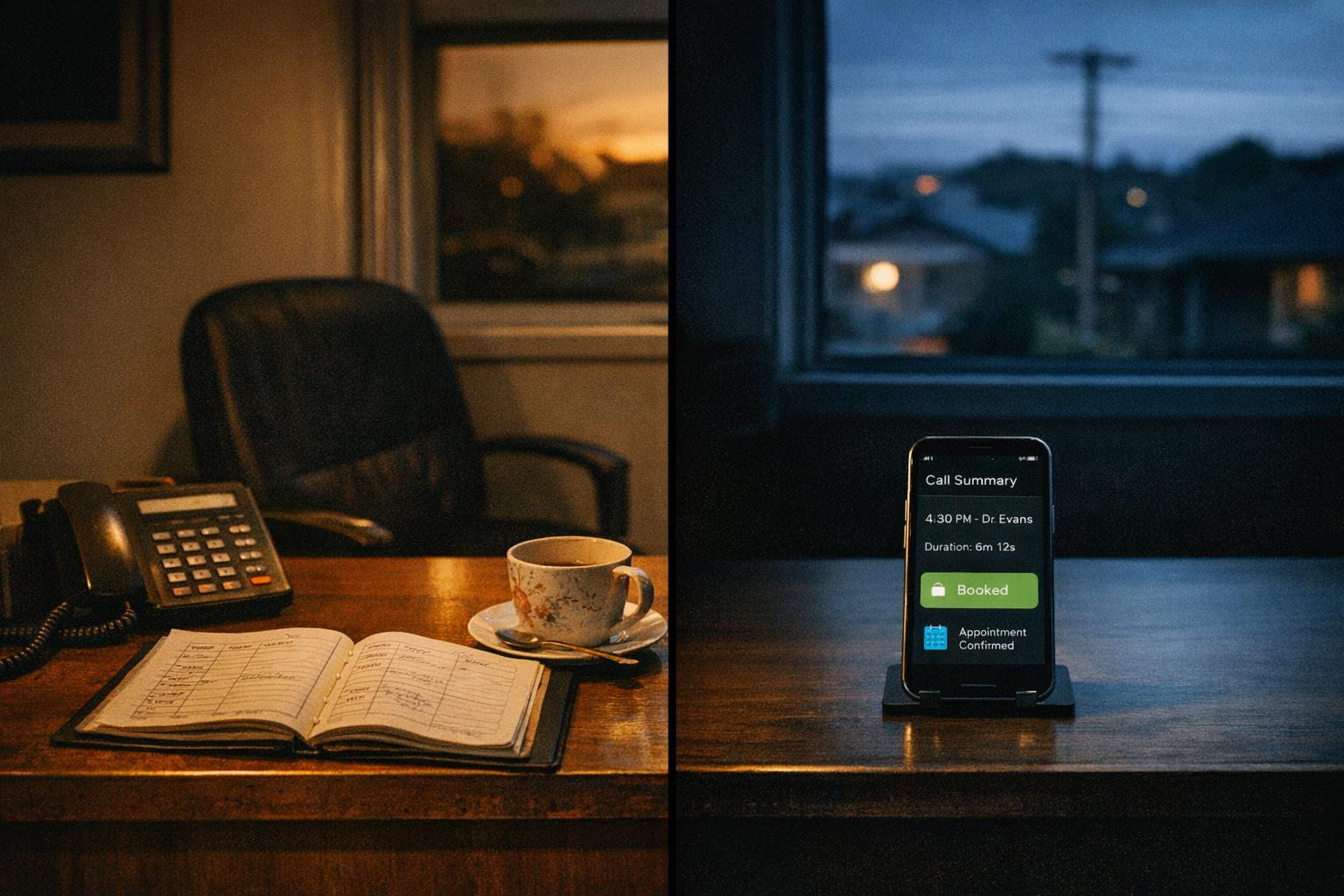
If you have started shopping for someone, or something, to answer your business phone, you have probably met both terms within five minutes: virtual receptionist and AI receptionist. They sound interchangeable. They are not, and the difference shows up in your bill, your hours of cover, and what actually happens to each caller.
Here is the plain-English version of how the two work in New Zealand in 2026, what each really costs, and an honest take on which suits which business.
The two models, in one paragraph each
A virtual receptionist is traditionally a human being in a call centre, answering calls for dozens of businesses at once. When your number rings, their screen shows your business name and a script card, and they answer as you. They take a message, maybe book an appointment if their system connects to yours, and email or text you the details. You pay a monthly retainer plus a fee per call or per minute, and the cover usually runs business hours, with after-hours as a paid extra.
An AI receptionist is software that does the same job with a generated voice and a real conversation. It answers instantly at any hour, knows your services, prices and FAQs because you taught it once in a dashboard, books straight into your live calendar, and texts you a summary of every call. You pay a flat monthly price. Talkify is the version of this built in Christchurch, with NZ voices, for NZ businesses.
Where the human service wins
Honesty first, because the comparison is not one-sided.
- Emotionally heavy calls. A genuinely distressed caller, a sensitive complaint, a grieving family ringing a funeral home. A skilled human reads the moment in a way software should not pretend to. If most of your calls are like this, pay for quality humans.
- One familiar voice. Some boutique services give you a named receptionist your regulars get to know. Software does not offer a relationship with a person, because there is no person.
- Judgement calls. A human can make a sideways decision a script never anticipated. AI escalates those instead, which is usually fine, but it is escalation, not resolution.
Where the AI wins
- It never queues a caller. A human service answers as many calls at once as it has staff rostered. An AI answers every caller simultaneously. Monday 8am, all four callers get picked up at once.
- It is always on shift. Nights, weekends, public holidays, included. Most human services charge a premium for after-hours, if they offer it at all.
- It finishes the job. This is the big one. A message service hands you a name to ring back, and by the time you do, the caller has often booked the next business on Google. An AI receptionist books the appointment while the caller is still on the line and texts them confirmation before they put the phone down.
- Flat pricing. Per-call billing means your busiest weeks, the ones where your marketing finally worked, are also your most expensive. A flat monthly price means a spike in enquiries is pure upside.
What each costs in NZ
| Human virtual receptionist | AI receptionist (Talkify) | |
|---|---|---|
| Advertised entry price | $19 to $50/month retainer | $129/month founding rate |
| What you actually pay at 60 to 80 calls/month | $200 to $500 once per-call charges land | $129, with 100 minutes included and overage from 10c/min |
| After-hours and weekends | Usually extra, sometimes unavailable | Included, no surcharge |
| Busy month | Bill goes up | Bill stays flat |
| Setup fee | Varies | $0 |
Human service figures reflect typical published NZ virtual receptionist and answering service pricing as at June 2026; every provider structures it differently, so always model your own call volume before signing anything.
The questions that decide it
Skip the feature lists and ask yourself three things:
- What do my callers mostly want? If the honest answer is bookings, prices, hours and availability, an AI handles the lot, instantly, around the clock. If it is delicate human conversations, hire humans.
- When do my calls come in? Check your missed-call log. If a chunk lands after 5pm or on weekends, business-hours cover is solving the wrong problem. See after-hours answering.
- What does a busy week do to my bill? Per-call pricing taxes growth. Flat pricing rewards it.
You can also test this with your ears. Talkify runs a live demo agent on 03 242 1183, day and night. Ring it, try to trip it up, and judge whether your callers would notice or mind. No form, no card, no salesperson.
The short version
If your phone mostly carries bookings and enquiries, an AI receptionist gives you wider cover, faster answers and a flatter bill, and it converts callers into bookings instead of messages. If your phone mostly carries emotionally complex conversations, pay for excellent humans and consider AI for the overflow and after-hours.
For the deeper comparison, read the full virtual receptionist NZ guide, see how Talkify compares with other NZ AI receptionists, or check pricing and set up your own agent. It can be answering your phone tonight.
Stop reading. Talk to it.
Call our Talkify Airline demo line or get a free demo agent on your own NZ number. No card needed.