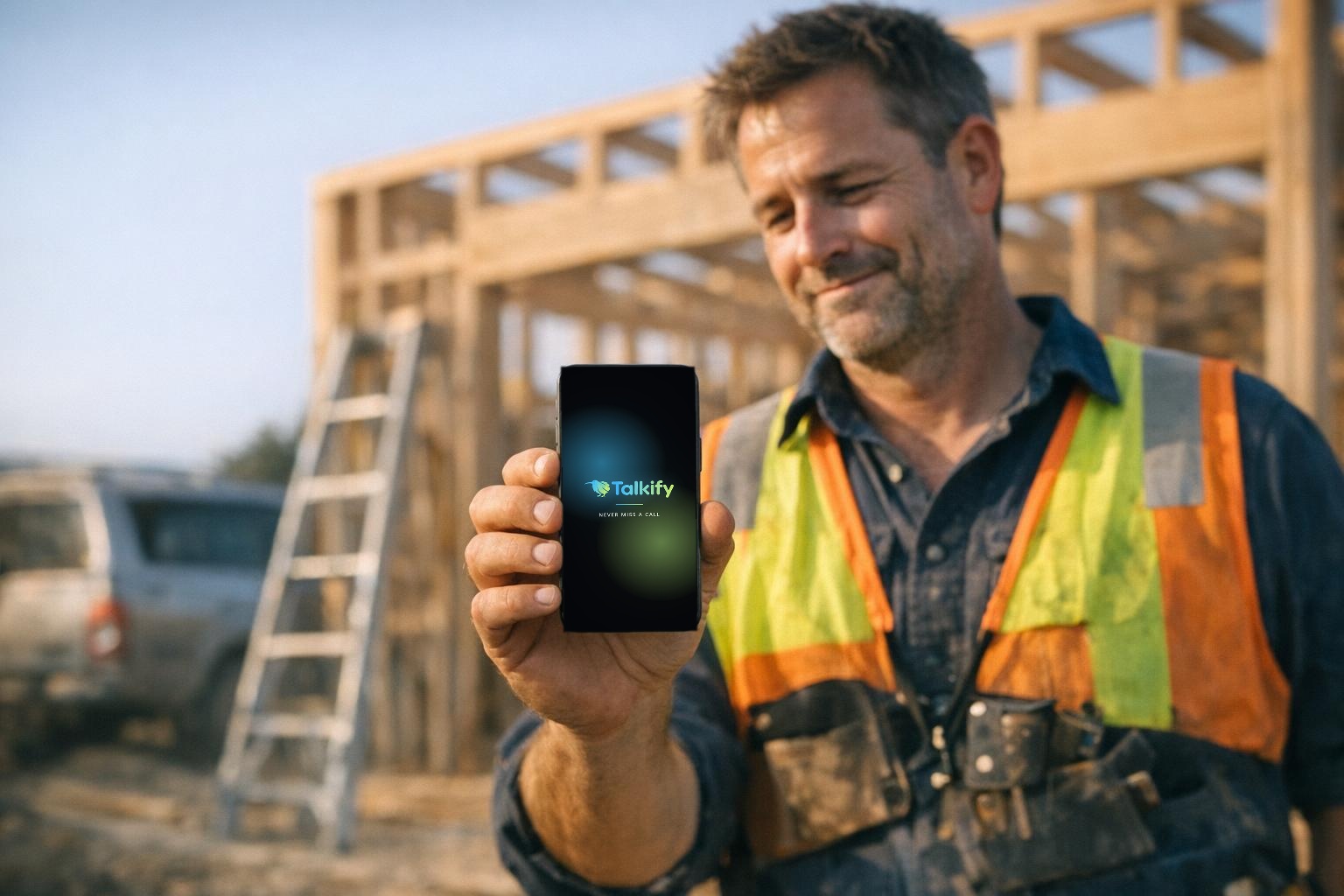
You are on a roof at half nine on a Tuesday. Your phone goes in your pocket. By the time you are down the ladder with your hands free, they have rung the next bloke on Google and booked him instead.
Nobody needs telling that missed calls cost money. What surprised us was when they happen.
The busiest hour is 9am, not midnight
Everyone sells phone answering for the nights and the weekends. That is the pitch the whole industry runs on. So we asked a few of the trades businesses on Talkify whether we could look at their call reports, the same summaries they see in their own dashboard. We expected a wall of 11pm emergencies.
It is not what the data says.
Nine in the morning is when crews get dispatched, when yesterday's jobs get chased, and when every customer who lay awake thinking about their problem finally picks up the phone. One person on a desk cannot absorb that. Nobody could. So the overflow went to a busy tone, and the busy tone went to your competitor.
The after hours calls are real and worth having. They are just not where the bulk of it goes.
What happens when the phone rings
Talkify answers on the first ring in a real Kiwi voice, using your business name. Five people can ring at once and all five get answered, with no queue and no hold music.
It checks the number against your Fergus contacts before it speaks, so a returning customer gets greeted by name instead of being asked to spell their street again.
Then it does the bit that saves you the evening. It works out whether this is a burst pipe or a quote for a bathroom. Whether the water is off. Whether it is their own place or a rental. Which suburb, and whether you even cover it. The questions you would ask, in the order you would ask them.
And then it writes it into Fergus. A new enquiry with the name, the number, the site address and the fault in the customer's own words, marked as having come off the phone. Nothing to re-key at nine at night with a beer going warm next to the laptop.
Where you allow it, the agent reads your team's calendar and books the visit into a slot that is genuinely free. It reads before it writes, so it cannot double book you.
Urgent calls do not get written up and left. You set the rules for what counts as urgent, and those calls go straight through to whoever is on call, with the caller's details and the problem already gathered. Nobody starts the conversation from scratch.
It does more than pick up
The same agent, pointed the other way, rings people back. Appointment reminders so the customer is home when your van turns up. Follow up calls on quotes that have gone quiet. Review requests the day after the job. That is all on the outbound calling side.
Connected to your Xero, it rings the invoices that have gone past due, in your name and your wording, and writes the outcome and any promise to pay onto the invoice. No commission, no collection agency. There is more on how that works on the invoice chasing page.
It answers your website too, in the same chat widget, knowing the same prices and the same availability as the one on the phone.
The first ten Fergus users get it free
The first ten Fergus users to come on board get the Fergus setup done free, and two months of Talkify on us. After that it is $129 a month at the founding rate for your first 3 months, then $199, with 100 minutes included, no setup fee, no per call charges and no lock in. A flat out week costs the same as a quiet one.
Want to hear it before you commit to anything? Ring 03 242 1183 and give it a hard time. Ask it what things cost. Try to catch it out. Ask it something it will not know. Most people ring expecting a robot and hang up having had a conversation.
Claim one of the ten spots, or have a look at what it does for plumbers and electricians.
Stop reading. Talk to it.
Hear one of our agents on the phone, or get a free demo agent on your own NZ number. No card needed.